Enterprise AI
Deutsche Bank Turns GenAI Production Wins Into Measurable Productivity and Compliance Gains
The German lender reports 15,000-plus developers using AI coding assistants, a 65% cost reduction in voice surveillance, and 97% document-extraction accuracy across three production use cases.
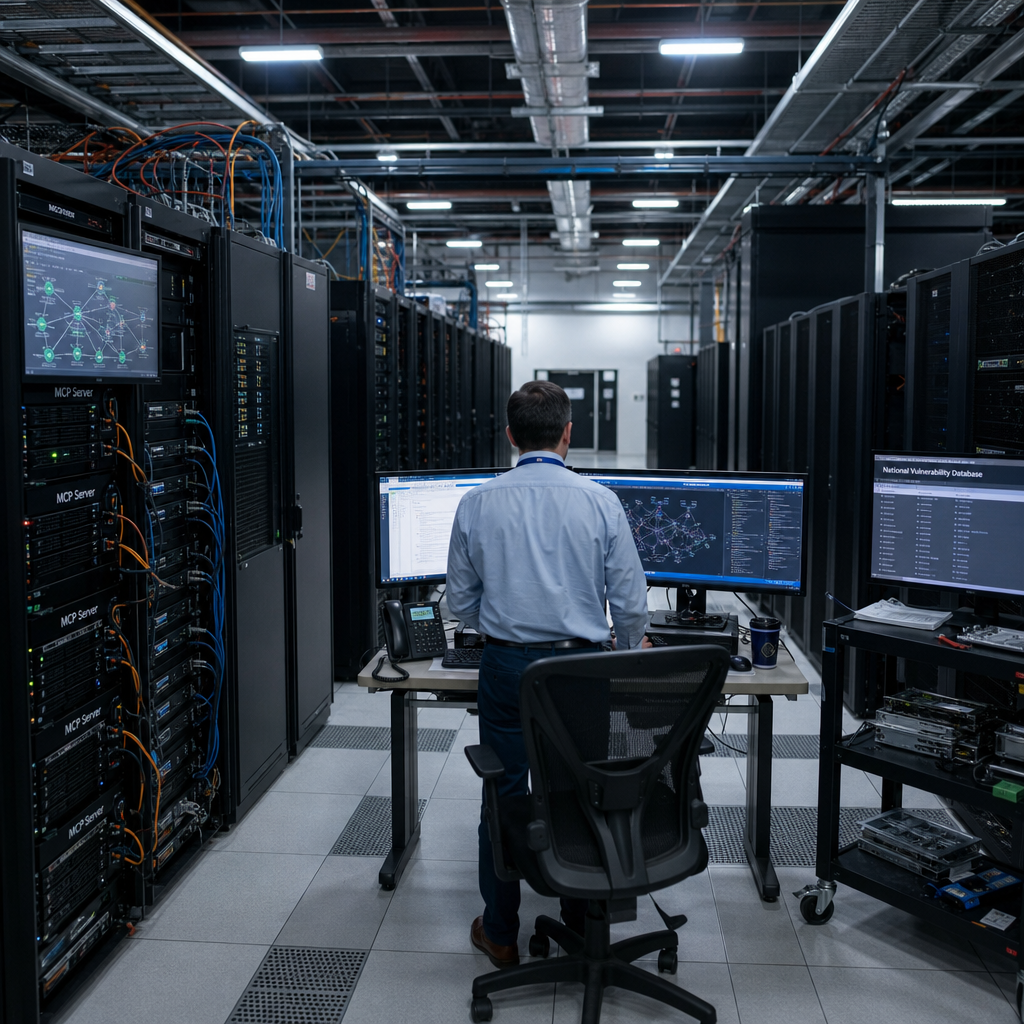
Deutsche Bank is scaling generative AI from proof-of-concept work into production systems across software engineering, client advisory, and anti-money-laundering compliance, with reported gains in developer productivity, transcription accuracy, and operating cost.
Deutsche Bank, one of Europe’s largest financial institutions, has moved three generative AI use cases from proofs of concept into production: AI-augmented software code development, advisory chatbots and assistants, and AI-supported anti-money-laundering compliance. The bank reports that more than 80% of its workforce uses generative AI tools and digital assistants such as dbLumina and Microsoft Copilot. More than 15,000 developers use AI coding assistants and save 1.5 to 2.5 hours per week each, according to Deutsche Bank’s technology transformation page. The same source reports that AI-supported voice surveillance exceeds 90% transcription accuracy and has produced a 65% cost reduction, while the dbTextract document-extraction tool achieves 97% accuracy and cuts handling time by around 40%.
The business outcome is measurable across three different parts of the bank. Code augmentation improves engineering throughput. Advisory assistants change how employees and clients interact with data and research. AML transcription cuts the cost of a regulatory obligation while improving accuracy. For C-suite readers, the case demonstrates that enterprise AI value can be quantified in hours saved, costs reduced, and accuracy gained rather than in abstract claims about transformation.
The program’s scale is part of the result. The bank began the work in 2023 with Publicis Sapient, building an enterprise AI/ML platform and infrastructure, including use cases, proofs of concept, operating models, and adoption plans, with the goal of scaling across investment, corporate, private/retail, and asset management businesses. Deutsche Bank says it is now scaling AI across internal productivity, engineering, operations, risk, and client-facing services.
Financial services firms have spent several years testing generative AI, but most of that activity has remained in pilots. Deutsche Bank’s public disclosures are notable because they tie production use cases to specific metrics. The bank names its tools, its partner, and the reported before-and-after results, which gives peer institutions a rare level of transparency to benchmark against.
The deployment also shows how a large, regulated organization can move from foundation-model experimentation to scaled value without abandoning governance. Deutsche Bank’s central AI platform provides shared services and guardrails under its Technology, Data and Innovation division, according to the bank. The ethics principles covering security, privacy, accountability, fairness, education, alignment, transparency, and human oversight create a framework that lets the bank move fast while staying inside regulatory expectations.
The choice of use cases is itself instructive. Deutsche Bank did not build a single showcase model. Instead, it selected workflows with clear owners, existing data, and measurable outcomes: software engineering, client advisory, and compliance. That pattern is likely to be repeated by other banks because it aligns AI investment with cost centers and revenue processes that already have metrics.
Publicis Sapient and Deutsche Bank identified three AI use cases that are delivering value to the bank, according to Publicis Sapient’s customer story. The first is augmenting software code development with AI, which helps developers document code, understand legacy systems, and complete tasks faster. The second is creating chatbots that work as advisers and assistants, with capabilities that include transcription, translation, summarization, research generation, and automated reporting. The third is applying AI in anti-money-laundering and regulatory compliance, using automated transcriptions of conversations to detect market abuse or suspicious activity.
Each use case sits on the bank’s central AI platform, which Deutsche Bank says includes shared services and guardrails. The platform is operated by the Technology, Data and Innovation division, and multiple use cases are already in production. That structure allows business divisions to consume AI capabilities without building separate infrastructure, which is a key factor in scaling.
Deutsche Bank’s published figures show the breadth of adoption. More than 80% of its workforce uses generative AI tools and digital assistants such as dbLumina and Microsoft Copilot. The bank also maintains AI and Data Ethics Principles covering security, privacy, accountability, fairness, education, alignment, transparency, and human oversight. These guardrails are not peripheral to the program; they are part of the reason the bank can operate generative AI in a regulated environment.
The partnership with Publicis Sapient began in 2023 with the construction of an enterprise AI/ML platform and infrastructure. According to the HFS Research case study published by Publicis Sapient, the scope included use cases, proofs of concept, operating models, and adoption plans. The target was scale across investment, corporate, private/retail, and asset management businesses, not a single pilot.
The HFS Research case study describes three GenAI use cases as delivering value to Deutsche Bank. The collaboration covered both technical infrastructure and organizational change, including how the bank would measure adoption and results. Publicis Sapient’s customer story says the two organizations identified the three use cases as delivering value to the bank.
Adoption was a deliberate part of the design. Deutsche Bank reports that more than 80% of its workforce uses generative AI tools and digital assistants such as dbLumina and Microsoft Copilot. That high penetration rate indicates the program moved beyond a small group of technical users and into daily operations across the bank.
In software development, Deutsche Bank says more than 15,000 developers use AI coding assistants and save 1.5 to 2.5 hours per week. In a July 2026 article, the bank said developers had progressed from those weekly savings to material 10x gains on a number of specific tasks over the previous 12 months. The bank named GitHub Copilot and Google’s Gemini Code Assist as the coding assistants available to its developers.
In compliance, AI-supported voice surveillance achieves more than 90% transcription accuracy and has resulted in a 65% cost reduction, according to Deutsche Bank’s technology transformation page. The accuracy figure is important because financial firms must monitor communications for market abuse and suspicious activity; higher transcription accuracy reduces the manual review burden and improves the reliability of surveillance.
In document processing, dbTextract extracts data from complex documents with 97% accuracy and cuts handling time by around 40%, according to Deutsche Bank. The tool addresses the large volume of unstructured documents in banking operations, including account opening, trade processing, and client onboarding. These are company-reported metrics rather than independent benchmarks, but they provide a baseline for peer comparison and vendor evaluation.
The bank’s reported metrics cluster around two kinds of ROI: time recovered and cost removed. The comparison below summarizes the before state, the AI deployment, and the reported result for each production use case, based on Deutsche Bank’s public disclosures.
| Use case | Pre-GenAI baseline | Reported result with GenAI |
|---|---|---|
| AI-augmented code development | Developers manually documented code and spent significant time understanding legacy code | 15,000+ developers using GitHub Copilot and Google Gemini Code Assist; 1.5–2.5 hours saved per developer per week; 10x gains on specific tasks over 12 months |
| Advisory chatbots and assistants | Manual transcription, translation, summarization, research and report generation | Automated transcription, translation, summarization and report generation across business lines; more than 80% of workforce uses GenAI tools such as dbLumina and Microsoft Copilot |
| AML voice surveillance | Manual review of recorded conversations for market abuse or suspicious activity | AI-supported transcription exceeds 90% accuracy and delivered a 65% cost reduction |
| dbTextract document extraction | Manual extraction from complex documents | 97% extraction accuracy and about 40% reduction in handling time |
Deutsche Bank’s reported metrics give peer institutions a benchmark for what scaled GenAI can return. On the code side, 15,000 developers saving 1.5 to 2.5 hours per week implies tens of thousands of recovered engineering hours each week, before accounting for the 10x gains the bank reports on specific tasks. The voice-surveillance result is especially relevant to compliance officers because it ties AI to a hard cost line.
The bank’s experience also suggests that enterprise AI value concentrates where processes are repetitive, documented, and measurable. Transcription, code documentation, and document extraction all fit that profile. Financial institutions that cannot name the workflow, the baseline cost, and the accuracy metric before starting a GenAI project may struggle to demonstrate ROI, whereas Deutsche Bank has published numbers for all three.
The governance structure is another takeaway. Deutsche Bank’s central platform with shared services and guardrails under the Technology, Data and Innovation division is a common pattern among large enterprises that have moved past pilots. The published AI and Data Ethics Principles give the program a framework for security, privacy, accountability, fairness, education, alignment, transparency, and human oversight, which is particularly important in a regulated sector.
In the Publicis Sapient case study, Deutsche Bank Chief Innovation Officer Gil Perez said the banking sector has a responsibility to take the lead on responsible AI, trustworthy AI, and fair usage of AI. He also said organizations should treat employee interactions with AI as a strategic asset and capture, analyze, and harvest prompts that are unique to their company.
Deutsche Bank’s sequence was to build a platform, define guardrails, deploy use cases, and measure results. The bank did not lead with a single foundation model; it led with business problems and an infrastructure that could serve many models over time. Peer executives should note that the reported ROI is expressed in hours saved, cost reduced, and accuracy gained, not in vague statements about transformation.
- Partner with Publicis Sapient in 2023 to build the enterprise AI/ML platform, proofs of concept, operating models and adoption plans across investment, corporate, private/retail and asset management businesses.
- Stand up a central AI platform with shared services and guardrails under Deutsche Bank’s Technology, Data and Innovation division.
- Put AI coding assistants such as GitHub Copilot and Google Gemini Code Assist in front of more than 15,000 developers and track weekly time savings.
- Move the three use cases into production: code augmentation, advisory assistants, and AML/regulatory compliance with automated transcription.
- Run the program under published AI and Data Ethics Principles covering security, privacy, accountability, fairness, education, alignment, transparency and human oversight.
For organizations considering a similar path, the practical starting point is a workflow with a measurable baseline. Deutsche Bank’s use cases all had clear owners: the engineering organization, the advisory and client-facing teams, and the compliance function. Those owners could quantify the before state and the after state, which is what made the production rollout legible to executives.
Deutsche Bank says it is scaling AI across internal productivity, engineering, operations, risk, and client-facing services, with measurable impact already visible in several areas. The central AI platform and the high rate of workforce adoption position the bank to add use cases without starting from scratch. The three current production use cases are likely to expand in scope as the bank gathers more data on accuracy, cost, and user behavior.
The bank has not disclosed a public product roadmap beyond its stated commitment to scale existing capabilities and maintain its ethics principles. For observers, the next milestones to watch are whether the 10x developer productivity gains on specific tasks become the norm across the engineering workforce, and whether the 65% voice-surveillance cost reduction holds as transaction volumes and regulatory requirements grow. Deutsche Bank’s published metrics give the market a concrete yardstick for enterprise GenAI ROI in banking.
Frequently asked
What generative AI use cases has Deutsche Bank put into production?
Deutsche Bank has moved three use cases into production: AI-augmented software code development, chatbots that work as advisers and assistants, and AI for anti-money-laundering and regulatory compliance through automated transcription of conversations.
How many Deutsche Bank employees use generative AI tools?
Deutsche Bank reports that more than 80% of its workforce uses generative AI tools and digital assistants such as dbLumina and Microsoft Copilot.
What measurable results has Deutsche Bank reported from its GenAI program?
The bank reports more than 15,000 developers using AI coding assistants, savings of 1.5 to 2.5 hours per developer per week, more than 90% transcription accuracy with a 65% cost reduction in voice surveillance, and 97% accuracy with a roughly 40% handling-time reduction in dbTextract document extraction.
Who is Deutsche Bank’s partner in the GenAI transformation?
Deutsche Bank partnered with Publicis Sapient beginning in 2023 to build an enterprise AI/ML platform and infrastructure, including use cases, proofs of concept, operating models and adoption plans.
Sources
- Deutsche Bank — Deutsche Bank is scaling AI across internal productivity, engineering, operations, risk and client-facing services; more than 80% of workforce uses generative AI tools; more than 15,000 developers use AI coding assistants; voice surveillance exceeds 90% accuracy with 65% cost reduction; dbTextract achieves 97% accuracy and cuts handling time by around 40%.
- Deutsche Bank — Developers have access to coding assistants such as GitHub Copilot and Google Gemini Code Assist; over the past 12 months developers progressed from time savings of 1.5 to 2.5 hours per week to 10x gains on specific tasks.
- Publicis Sapient — Publicis Sapient and Deutsche Bank identified three AI use cases delivering value: augmenting software code development, creating chatbots as advisers and assistants, and applying AI in anti-money-laundering and regulatory compliance.
- HFS Research — Deutsche Bank partnered with Publicis Sapient in 2023 to build an enterprise AI/ML platform and infrastructure; three GenAI use cases are delivering value.