Enterprise AI
Morgan Stanley GenAI ROIC Frameworks Project 25-50% Returns for Hyperscalers
July 2026 research note from analysts Brian Nowak, Stephen C Byrd and Adam Wood introduces bottom-up models that quantify unit economics for GPU leasing and model APIs amid rising inference demand.
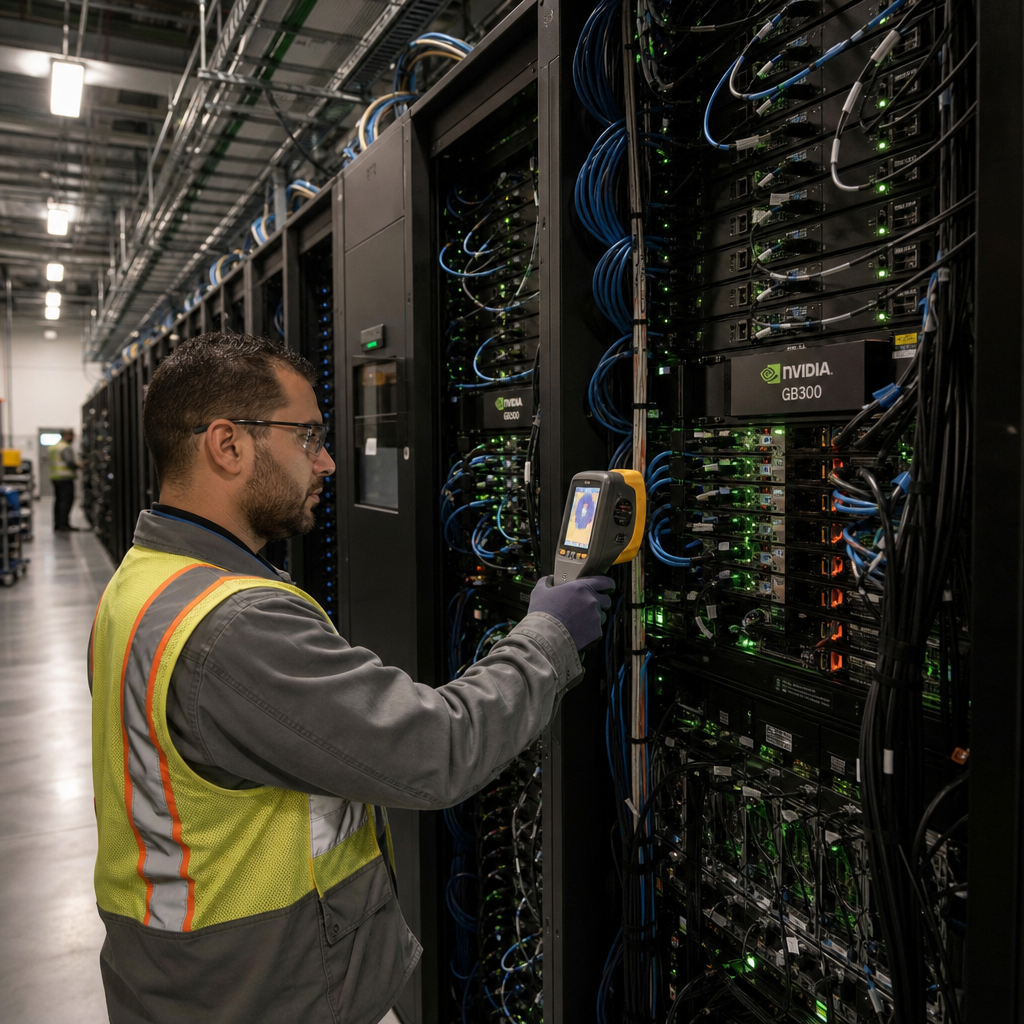
Morgan Stanley's GenAI ROIC frameworks are three bottom-up analytical models that project attractive incremental returns on invested capital above 25 percent for generative AI infrastructure and services.
Morgan Stanley released its July 27 2026 research note that applies quantitative models to assess returns from generative AI infrastructure investments by major cloud providers.
The analysis centers on token economics and cost efficiency factors including depreciation schedules and energy consumption to determine viability of large scale deployments.
What are the three GenAI ROIC frameworks developed by Morgan Stanley analysts?
The first framework evaluates hyperscaler GPU leasing as an infrastructure as a service offering with assumptions around utilization rates and rental pricing.
Base case modeling incorporates approximately 410000 GB300 GPUs per 1 GW data center operating at 75 percent utilization and $8.5 per hour rental pricing.
The second framework examines model API services delivered on proprietary infrastructure owned by the hyperscalers themselves.
The third framework assesses model API services that run on third party infrastructure where the operator leases capacity from external providers.
How do the Morgan Stanley frameworks calculate incremental ROIC for GPU leasing operations?
Unit economics analysis begins with capital expenditure requirements for GPU clusters and then factors in ongoing operational costs such as power and maintenance.
Token throughput rates and pricing per token determine revenue potential while depreciation periods influence the return profile over time.
The models apply sensitivity analysis to variables including GPU pricing variations across reserved and spot instances to test robustness of projected returns.
| Scenario | Incremental ROIC | Key Assumptions | EBIT Margin Range |
|---|---|---|---|
| Hyperscaler GPU Leasing (IaaS) | Approximately 31 percent | 410000 GB300 GPUs per 1 GW at 75 percent utilization and $8.5 per hour pricing | 60 to 70 percent |
| Model API on Proprietary Infrastructure | Approximately 46 percent | Proprietary data centers with integrated model serving | Not specified in frameworks |
| Model API on Third-Party Infrastructure | Approximately 25 percent | Leased capacity from external providers | Not specified in frameworks |
What market and stakeholder implications arise from the projected 25 to 50 percent ROIC ranges?
Enterprise customers evaluating AI infrastructure investments can use the frameworks to benchmark expected returns against alternative capital allocation options.
Hyperscalers gain validation for continued capital expenditures on GPU clusters given the attractive incremental returns across the modeled scenarios.
Model API providers receive guidance on whether to build proprietary capacity or rely on third party leasing based on the differing ROIC outcomes.
What ordered steps should enterprises follow when applying the Morgan Stanley ROIC models?
- Identify the relevant business scenario such as GPU leasing or model API delivery.
- Gather base case assumptions including GPU counts utilization rates and pricing data.
- Calculate unit economics by modeling token throughput depreciation and energy costs.
- Apply sensitivity analysis to key variables like GPU pricing and utilization.
- Compare projected incremental ROIC against internal hurdle rates for investment decisions.
How do expert reactions from Morgan Stanley analysts support continued AI capex?
The research note emphasizes optimism regarding long term returns and provides the first quantitative framework to evaluate the three distinct business scenarios.
While GPU pricing is a critical variable requiring close monitoring—varying by hyperscaler, chip type, and reserved versus spot/on-demand instances—we estimate this business can generate incremental EBIT margins of approximately 60%–70%, with an ROIC range of 25%–40%.Brian Nowak, Morgan Stanley analyst
What comes next for hyperscalers and model API providers following the Morgan Stanley report?
Major cloud providers including Microsoft Google Amazon and Meta are positioned to benefit from the bullish projections and may accelerate infrastructure buildouts.
Enterprises should monitor actual GPU utilization rates and token pricing trends to validate whether realized returns align with the modeled base cases.
Further research may extend the frameworks to include additional variables such as regional energy costs and regulatory constraints on data center expansion.
The analysis provides a structured approach for chief information officers to quantify potential returns when planning generative AI deployments at scale.
Frequently asked
What base case assumptions underpin the Morgan Stanley GPU leasing ROIC calculation?
The base case includes approximately 410000 GB300 GPUs per 1 GW data center at 75 percent utilization and $8.5 per hour rental pricing.
Sources
- moomoo — In a report released on July 27, Morgan Stanley analysts Brian Nowak, Stephen C Byrd, and Adam Wood developed three bottom-up generative AI ROIC valuation frameworks with ROIC ranges of approximately 31%, 46%, and 25%, respectively.
- BigGo Finance — Morgan Stanley's latest research, using three quantitative frameworks, estimates that the incremental return on invested capital (ROIC) for generative AI investments can reach 25% to 50%... Specifically, the GPU leasing business for hyperscalers shows an ROIC of approximately 31%, model API services on proprietary infrastructure about 46%, and model API services relying on third-party infrastructure about 25%.
- moomoo — We are optimistic about the long-term ROIC of these investments and, for the first time, propose a three-part generative AI (GenAI) ROIC analytical framework and model, outlining what we believe are attractive…