Frontier Models
Mistral Large 4 open weights put Le Chonk at the frontier of European open models
The 1.05 trillion-parameter open-weight model, trained in European datacenters, ties GLM-5.3 on a leading coding-agent index while using fewer tokens and now runs on Open Math OS.
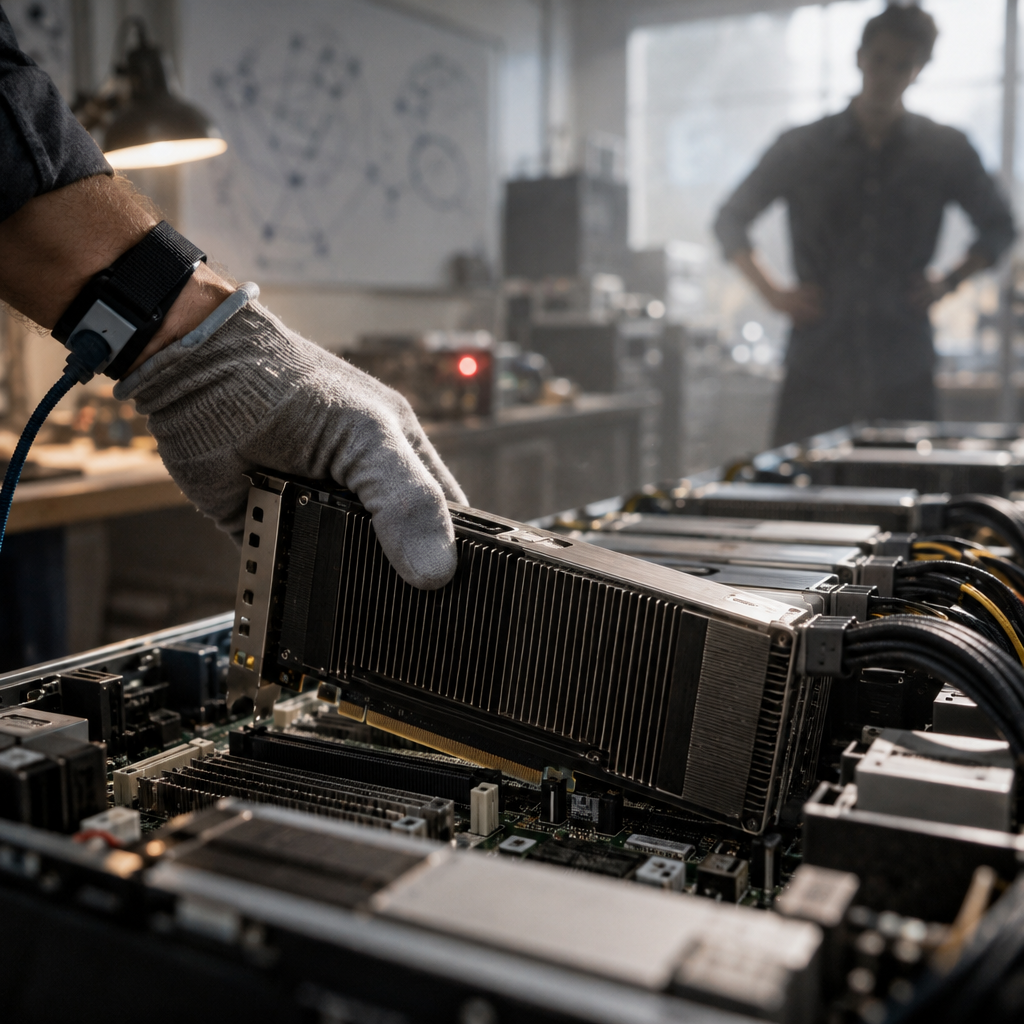
Mistral Large 4 is a 1.05 trillion-parameter open-weight mixture-of-experts model released by Mistral AI on Oct. 29, 2026, with a 1 million-token context window and roughly 52 billion active parameters per token.
Mistral AI released the open weights of Mistral Large 4, the model internally nicknamed Le Chonk, on Oct. 29, 2026. The release makes the 1.05 trillion-parameter model the largest downloadable open-weight model from a European lab and places it at the top of several open coding benchmarks. The weights are available on Hugging Face, and the model is already live for approved teams on Open Math OS, a mathematics research platform built exclusively on open models.
Mistral AI described the release as making Mistral Large 4 the best open-weight model for coding and among the world's most capable open models overall. Because the weights are public, that claim is now testable by independent evaluators and enterprise buyers rather than resting on vendor-reported API scores.
What is Mistral Large 4 and why is it called Le Chonk?
Mistral Large 4 is a natively multimodal model built on a mixture-of-experts architecture. It has approximately 1.05 trillion total parameters, with about 52 billion active per token, and supports a context window of 1 million tokens. The model was trained from scratch on 3,800 NVIDIA Grace Blackwell GPUs in Mistral's European datacenters, according to the company.
The nickname Le Chonk appears in Mistral's own release materials and has become the informal label for the model. The name is a play on the model's size; chonk is internet slang for something large or substantial. Mistral has kept the nickname while publishing formal technical documentation and the model card on Hugging Face.
Mixture-of-experts design means only a fraction of the model's parameters are active for any given token. Mistral reports roughly 52 billion active parameters per token, a design that keeps inference costs closer to a 50-billion-parameter dense model than to a 1-trillion-parameter one. The 1 million-token context window supports long documents, multi-file codebases, and extended agent sessions.
The model supports three configurable reasoning modes: low, medium, and high. That configuration lets operators trade compute for reasoning depth depending on the task, which matters for agentic workloads where token budgets and latency constrain deployment. The Hugging Face repository describes the model as Mistral's largest and most capable to date, with 49 billion active parameters per token excluding embeddings and output layers.
How does Mistral Large 4 compare with GLM-5.3 and other open-weight models?
The most cited comparison is against Zhipu AI's GLM-5.3. On the Artificial Analysis Coding Agent Index, Mistral Large 4 scored 48%, tying GLM-5.3 for the lead among open-weight models. Mistral AI said the model achieved that result while using 47% fewer tokens per task on average than GLM-5.3, a difference that can cut cost and latency in agent pipelines.
Agentic coding benchmarks measure how well a model can complete multi-step tasks such as writing tests, fixing failures, and navigating a repository. FrontierCode 2.0 and Terminal-Bench 4.0 are examples of that category, and both are cited in Mistral's release. Token efficiency matters in these benchmarks because an agent that produces long, meandering outputs can score well on task completion while being impractical to run at scale.
On Terminal-Bench 4.0, Mistral Large 4 scored 41%, up from 28% at the preview release. The 13-point improvement came after continued reinforcement learning on top of the preview checkpoint. Artificial Analysis is an independent benchmarking organization whose Coding Agent Index is widely referenced in the model-release cycle, and its score for the new open-weight release will be independently verifiable once the model is loaded into that evaluation pipeline.
| Metric | Mistral Large 4 | GLM-5.3 |
|---|---|---|
| Total parameters | 1.05 trillion | Not disclosed in cited sources |
| Active parameters per token | 52 billion, including embeddings and output layers | Not disclosed in cited sources |
| Context window | 1 million tokens | Not disclosed in cited sources |
| Artificial Analysis Coding Agent Index | 48% (tied leader) | 48% (tied leader) |
| Average token usage per task | 47% fewer than GLM-5.3 | Baseline |
| Terminal-Bench 4.0 | 41%, up from 28% at preview | Not disclosed in cited sources |
Token efficiency is increasingly the metric that matters in production. An agent that invokes a coding model thousands of times per day can see material cost differences between two models that score the same on a benchmark. Mistral's claim of parity with 47% lower token usage is therefore a deployment argument as much as a benchmark argument.
What changed between the preview and the open-weight release?
Mistral introduced Mistral Large 4 as a public preview earlier in October. The preview model already carried the 1 trillion-parameter scale, 52 billion active parameters, and the promise that weights would follow by the end of the month. The open-weight version released Oct. 29 fulfills that commitment.
The open-weight version is not identical to the preview. Mistral continued reinforcement learning training on top of the preview checkpoint, and the company reports substantial gains with no signs of saturation. The Terminal-Bench 4.0 improvement from 28% to 41% is the headline evidence of that continued training.
The preview release established the architecture and the reasoning modes. The open-weight release adds the weights, the license, and the deployment integrations. That sequencing lets Mistral validate the model with early users before committing to the open distribution.
How was the model trained and what does the license permit?
Mistral trained Mistral Large 4 from scratch on 3,800 NVIDIA Grace Blackwell GPUs located in European datacenters. The choice of European infrastructure is part of the company's sovereignty pitch: the model's weights, training infrastructure, and release path all sit outside U.S. or Chinese control.
The weights are released under the Mistral Ecosystem Open-Weight License, described as a modified MIT license. The modification is relevant for enterprises that assume MIT means unrestricted use. The cited materials do not spell out the modified terms, so organizations should review the license text before deployment.
The model is downloadable from Hugging Face at mistralai/Mistral-Large-4-1T-A52B. The repository name encodes the scale: 1T for total parameters and A52B for active parameters per token. The download is separate from the Open Math OS deployment, so teams without platform approval can still run the model independently.
What does the Open Math OS deployment mean for research teams?
Open Math OS is a collaborative mathematics research platform built exclusively on open models. Mistral Large 4 is now live for approved teams on the platform, giving researchers access to the model inside a scientific workflow rather than as a raw download.
The deployment is a test of whether open-weight models can serve as the backbone of a research product. Open Math OS's decision to run exclusively on open models aligns with Mistral's argument that open weights enable verifiability, customization, and control in ways that API-only models cannot.
Researchers on the platform will work with the model in the context of mathematical discovery, a domain that stresses long context and rigorous reasoning. The 1 million-token window and the high reasoning mode are directly relevant to that workload.
What do experts say about the release?
ML4 OSS showcases our science team’s ability to innovate at speed. Building on the ML4 Preview, the open-weight version continues reinforcement learning training and delivers substantial gains with no signs of saturation.Pierre Stock, Vice President of Science, Mistral AI
Pierre Stock, vice president of science at Mistral AI, said the open-weight version continues reinforcement learning training and delivers substantial gains with no signs of saturation. The comment points to a broader trend: open-weight labs are treating the weight release as a midpoint in training, not the end.
Stock's framing positions the open-weight release as a snapshot of a model that is still improving. That contrasts with closed-model releases, where the API version is typically the final version until the next generation.
How can organizations deploy Mistral Large 4?
Mistral Large 4 is designed for teams that run their own infrastructure. The steps below describe the release path covered in the announcement and the Hugging Face repository.
- Download the weights from Hugging Face at mistralai/Mistral-Large-4-1T-A52B.
- Review the Mistral Ecosystem Open-Weight License before deployment; the license is a modified MIT.
- Select a reasoning mode (low, medium, or high) for the task.
- Apply for approved-team access on Open Math OS for mathematics research workflows.
- Monitor leaderboard updates from Artificial Analysis and Terminal-Bench for post-release changes.
Deployment teams should benchmark the model on their own tasks before committing. The 47% token-efficiency claim is an average across tasks, and the actual difference will vary by workload. The configurable reasoning modes add another variable: high mode may improve accuracy but increase token usage.
What are the market and sovereignty implications for Europe?
Mistral Large 4 gives Europe a leading open-weight model outside China. The open-weight leadership tier has recently been dominated by Chinese labs, including Zhipu AI with GLM-5.3. Mistral's release resets that narrative by matching GLM-5.3's benchmark score with better token efficiency.
SiliconANGLE characterized the release as providing sovereign control for the Le Chonk model. The open weights allow organizations to run the model on their own infrastructure, fine-tune it, and audit its behavior without depending on a vendor API.
Mistral has positioned the model for coding and cyber workloads, according to the release materials. Detailed cyber benchmarks were not included in the cited sources. Coding agents are among the highest-value enterprise workloads, and the open-weight release gives buyers a way to evaluate the model against those use cases directly.
Enterprise buyers evaluating open-weight models weigh benchmark scores against licensing, support, and reproducibility. Mistral Large 4's open weights address reproducibility. The modified MIT license addresses legal risk, provided the modifications are acceptable to the buyer's legal team.
What comes next for Mistral Large 4?
The weight release fulfills Mistral's end-of-month commitment, but the model remains under active development. Continued reinforcement learning produced the jump from 28% to 41% on Terminal-Bench 4.0, and the company said there are no signs of saturation.
The competitive pressure from GLM-5.3 will not disappear. Zhipu AI has consistently updated its models, and the open-weight leaderboard is contested. Mistral's token-efficiency advantage gives it a production argument, but benchmark parity means the race remains close.
On Open Math OS, approved teams will generate real-world usage data that could inform the next training cycle. Mistral's decision to put the model into a research platform before publishing further updates suggests the company is treating deployment feedback as part of the training loop.
For enterprise buyers, the immediate question is whether Mistral Large 4's benchmark claims reproduce in their own agent pipelines. The open weights make that question testable. The model's 1 million-token context window and configurable reasoning modes give deployment teams room to adapt it to long-horizon tasks.
Mistral Large 4 enters the open-weight field with the strongest benchmark credentials of any European model to date. It ties the leading Chinese open model on a key coding-agent index while using far fewer tokens, and its open weights give buyers an alternative to API lock-in. The next several months will show whether that combination translates into production adoption.
Frequently asked
What is Mistral Large 4?
Mistral Large 4, nicknamed Le Chonk, is a 1.05 trillion-parameter natively multimodal Mixture-of-Experts model from Mistral AI with about 52 billion active parameters per token and a 1 million-token context window. Mistral released its open weights on Oct. 29, 2026.
How does Mistral Large 4 compare with GLM-5.3?
On the Artificial Analysis Coding Agent Index, Mistral Large 4 tied GLM-5.3 at 48% while using 47% fewer tokens per task on average, according to Mistral AI. It also improved its Terminal-Bench 4.0 score to 41% from 28% at the preview.
Where can I download Mistral Large 4?
The weights are available on Hugging Face under the repository mistralai/Mistral-Large-4-1T-A52B, released under the Mistral Ecosystem Open-Weight License.
Sources
- Mistral AI — Mistral Large 4 ranks as the best open-weight model for coding and among the world's most capable open models overall. The release reports the 48% Coding Agent Index score, the 47% token-efficiency figure versus GLM-5.3, the 41% Terminal-Bench 4.0 score, training on 3,800 Grace Blackwell GPUs in European datacenters, the Mistral Ecosystem Open-Weight License, and the Open Math OS deployment.
- Hugging Face — Mistral Large 4 is a 1 trillion-parameter natively multimodal mixture-of-experts model with 49 billion active parameters per token, 52 billion including embeddings and output layers, and a 1 million-token context length. The repository name and download location are documented here.
- Mistral AI — Mistral Large 4 was launched as a public preview with 1 trillion parameters and 52 billion active parameters, with weights promised by the end of the month.
- SiliconANGLE — The open-weight release provides sovereign control for Mistral Large 4, known as Le Chonk. The article includes a quotation from Pierre Stock, vice president of science at Mistral AI.