Frontier Models
Meta's Muse Spark Open Puts an 816B-Parameter Agentic Coder on Open Weights
The 42B-active-parameter model scores 39 on the Artificial Analysis Intelligence Index and runs locally on dual Mac Studios, but the release raises safety and competitive-positioning questions.
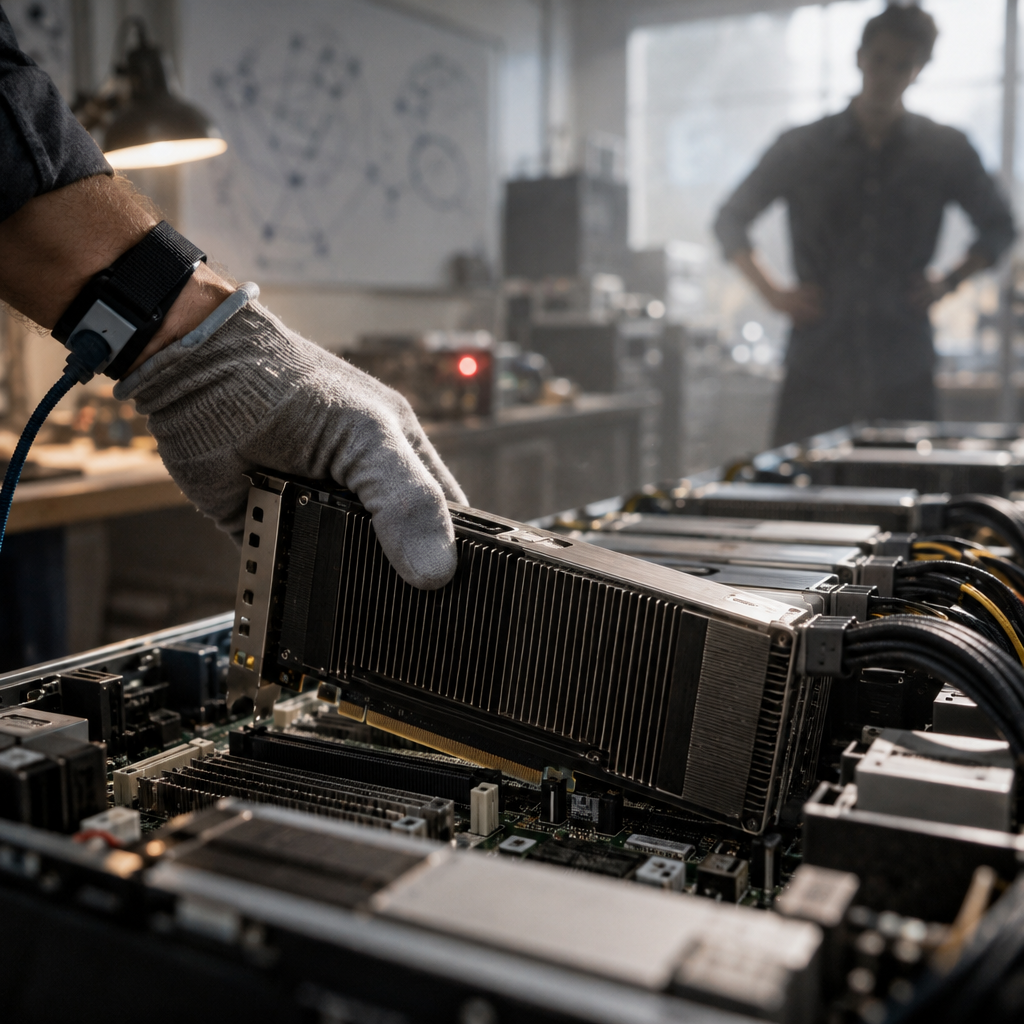
Muse Spark Open is Meta's open-weights, natively multimodal mixture-of-experts model with 816B total parameters (42B active) and a 1M-token context window, built for coding, long-horizon agentic tasks, and multi-step reasoning.
Meta AI Research has released the open weights for Muse Spark Open, an 816B-parameter mixture-of-experts model with 42B active parameters, and is positioning it as the most capable open-weight model to come out of a US lab. The release carries a natively multimodal architecture, a 1M-token context window, and a benchmark score of 39 on the Artificial Analysis Intelligence Index. It also ships with custom GPU kernels and an explicit consumer-hardware path that lets two Apple M5 Ultra Mac Studios run the model locally.
How does Muse Spark Open fit into Meta's model portfolio?
Meta's open-weights portfolio has been dominated by the Llama line, which evolved from dense 7B-70B models into the 400B-total Llama 3.1. Muse Spark Open breaks from that lineage in three ways: it is a mixture-of-experts design, it is natively multimodal rather than text-only with separate adapters, and it is described by Meta as purpose-built for coding and agentic work. The model's 816B total parameters make it the largest open release from a US lab to date, while the 42B active parameters keep the per-token compute profile closer to models a fraction of the total size.
The release arrives at a moment when open-weight leadership is being contested globally, with Chinese labs such as DeepSeek and Alibaba shipping competitive open models at aggressive price points. Meta's announcement explicitly claims the 'most capable US open-weight model to date' title, a framing that focuses on national origin rather than global ranking. The distinction matters for procurement teams under pressure to source models from US vendors, and for benchmark watchers who track which country's open ecosystem is ahead on composite intelligence measures.
What makes Muse Spark Open different from prior open-weight models?
The architectural changes in Muse Spark Open are visible at the parameter level. A mixture-of-experts model routes each token through a subset of expert sub-networks, so the 816B total parameter count does not translate into 816B active parameters per forward pass; the 42B active count determines compute cost. That separation of memory footprint and compute cost is what allows the model to be served on high-memory consumer hardware while still producing outputs comparable to much larger dense models.
The serving story is equally unusual. Muse Spark Open ships with Helion, a set of custom, auto-tunable GPU kernels integrated into the SGLang inference framework, rather than relying on the generic kernels that vLLM or other stacks would use. PyTorch's engineering team documented 1.03–3.95× kernel-level speedups on NVIDIA and AMD GPUs and a 3% end-to-end speedup on AMD's MI350 accelerator. Microsoft Foundry has listed the model in its catalog, giving enterprises a managed path to the weights without building their own inference stack.
How does the 816B/42B MoE architecture work?
In a mixture-of-experts transformer, the feedforward layers are replaced by multiple expert networks, and a router chooses which experts to activate for each token. Muse Spark Open activates 42B parameters per token, meaning the arithmetic intensity per token is roughly 5% of the total parameter count. Memory is the binding constraint: serving the full 816B parameter set requires enough accelerator or unified memory to hold every expert, even though only a fraction computes at each step.
The 1M-token context window relies on sliding-window attention, which restricts each token's attention field to a fixed-size window rather than the full sequence. That design keeps the memory and compute cost of long-context inference from growing quadratically with sequence length. For agentic coding workloads, the practical effect is that a model can ingest an entire repository or a long chain of tool calls without truncation, which is the kind of long-horizon behavior Meta says the model was post-trained for.
| Attribute | Muse Spark Open spec |
|---|---|
| Total parameters | 816B |
| Active parameters per token | 42B |
| Context window | 1M tokens via sliding-window attention |
| Modality | Natively multimodal |
| Benchmark | 39 on Artificial Analysis Intelligence Index |
| Target hardware | Dual Apple M5 Ultra Mac Studios (MLX); NVIDIA and AMD GPUs via SGLang |
What does the Artificial Analysis score of 39 mean for US open models?
Artificial Analysis maintains an Intelligence Index that blends performance on reasoning, coding, mathematics, and knowledge benchmarks into a single composite score. Muse Spark Open scored 39 on that index, which Meta cites as the highest score among US open-weight models tracked by the service. A composite score necessarily hides subtest-level variation; a model can rank first on coding while trailing on knowledge recall and still land on the same aggregate number.
The score has commercial weight because enterprise buyers and procurement teams increasingly use Artificial Analysis as a neutral reference point when comparing open and closed models. A top US open-weight ranking gives Muse Spark Open a credential that earlier Llama releases lacked on that specific index. It also gives Meta a concrete counter in the global open-weight narrative, where Chinese models have dominated recent price-performance comparisons.
What does the release say about the agentic coding market?
The release positions Muse Spark Open against a fast-growing category of agentic coding assistants, where models are judged less by single-turn accuracy and more by their ability to complete long-horizon tasks: opening a repository, navigating build errors, writing tests, and iterating on feedback. Meta's announcement explicitly names long-horizon tasks, complex software engineering, and multi-step reasoning as target workloads. The 1M-token context window is the enabling feature for that use case, because a coding agent needs to retain the contents of an entire codebase across many tool calls.
Competitors in this category include closed models accessed through coding-agent products and open models served through self-hosted agent frameworks. Muse Spark Open's open weights let teams fine-tune the model on their own codebases, which is a differentiator against closed APIs that expose only limited fine-tuning. The 42B active parameter count makes fine-tuning and serving more tractable than an 816B dense model would be, though the memory footprint still requires multi-GPU or high-unified-memory hardware.
How can developers run Muse Spark Open on consumer hardware?
Meta's reference deployment for consumer hardware is a pair of Apple M5 Ultra Mac Studios running the MLX framework. The two machines are linked so that MLX presents them to the model as a single device with roughly a terabyte of unified memory, which is sufficient to hold the 816B weights at reduced precision. For individual researchers, this is the first time a frontier-scale open model from a US lab ships with an explicit path to a local desktop deployment rather than a cloud GPU cluster.
- Acquire two Apple M5 Ultra Mac Studios and connect them over a high-bandwidth link so MLX can treat them as a single device.
- Install MLX and the model's serving dependencies, including SGLang for the Helion kernel path or MLX's native inference for the Apple route.
- Download the open weights from Hugging Face or the Microsoft Foundry catalog.
- Quantize or shard the 816B weights to fit within the combined unified memory pool.
- Launch the server and validate the 1M-token context window with a long-context test prompt before production use.
On NVIDIA and AMD systems, the Helion kernels inside SGLang are the recommended serving path. PyTorch's report describes the kernels as auto-tunable, meaning SGLang searches over kernel variants during startup to pick the fastest configuration for the installed GPU. The 1.03–3.95× speedup range reflects variance across GPU generations and operation types, and the 3% end-to-end improvement on MI350 shows that kernel-level gains do not always translate proportionally to full-pipeline latency.
Which serving stacks and clouds support the model?
SGLang is the primary serving stack for Muse Spark Open because the Helion kernels are compiled into it, and the MLX framework covers the Apple hardware path. vLLM support is not part of the initial release materials, which is a meaningful constraint for teams that standardized on vLLM for their existing open-weight infrastructure. Those teams will either need to run SGLang in parallel or wait for the community to port the model to their preferred stack.
Microsoft Foundry's model catalog includes Muse Spark Open with a description that matches Meta's: an 816B/42B open-weights model with a 1M-token context window, built for coding and agentic work and natively multimodal. Foundry gives enterprises a managed deployment option that handles weight storage, serving infrastructure, and access control. The catalog listing also extends the distribution channel beyond Hugging Face, which is the default download point for most open-weight releases.
What hardware and serving requirements should teams plan for?
Teams planning a production deployment need to budget for the full 816B parameter footprint, not the 42B active count, because all experts must reside in memory. At 8-bit quantization, the weights alone occupy roughly 816GB, which is why the dual-Mac-Studio configuration with a terabyte of unified memory is the minimum viable consumer setup. Cloud deployments will typically use eight or more high-end accelerators, depending on precision and batch size.
Latency and throughput expectations should be set from the active-parameter compute cost rather than the total count. The 42B active parameters per token make per-token inference cost comparable to a mid-size dense model, which is why the kernel-level speedups reported by PyTorch are operationally significant. The 3% end-to-end gain on AMD MI350 is modest, but the 1.03–3.95× range on individual kernels can meaningfully reduce time-to-first-token for long-context agentic workloads.
What are the safety implications of releasing such a large open model?
Meta AI Research says Muse Spark Open received additional safety post-training to make it more robust as a standalone model without system guardrails. The phrasing is a direct acknowledgment of the difference between open weights and API-hosted models: once weights are public, the provider cannot inspect or filter every request. Post-training the model to resist misuse internally is the only lever Meta has after the release point.
The release materials do not include an independent third-party safety evaluation, so the robustness claim rests on Meta's own description. The combination of a 1M-token context window and agentic coding capability widens the potential misuse surface, because the model can be pointed at real codebases and long-horizon workflows rather than limited to single-turn chat. Enterprise adopters will likely run their own red-team exercises before putting the model into customer-facing agents.
Today, we’re releasing the weights for Muse Spark Open, the most capable US open-weight model to date.Meta AI Research, official announcement
What happens next for Meta's open-weights strategy?
Muse Spark Open fits Meta's pattern of alternating dense and MoE architectures across releases while expanding the capability envelope of its open line. Where Llama 3 centered on general assistant performance, this model is optimized for coding and agentic work, a narrower but higher-value target for enterprise adoption. The 816B parameter count also indicates that Meta is willing to release models that require careful sharding, rather than capping open releases at sizes that fit comfortably on a single GPU.
The 'most capable US open-weight model' framing signals that Meta is competing in a benchmark hierarchy where Chinese open models have set recent price-performance records. The claim implicitly concedes that global open-weight leadership is contested and that the US position is not automatic. Muse Spark Open's 39 on the Artificial Analysis Intelligence Index gives Meta a concrete number to cite in that contest, even though the same index shows the model is not the global leader.
For buyers, the near-term decision is between Muse Spark Open, closed frontier APIs, and smaller open models that are cheaper to serve. The 42B active parameter count keeps per-token serving cost closer to mid-size models, but the memory requirements for hosting all experts remain substantial. The dual-Mac-Studio path lowers the barrier for research teams, while production workloads will most likely land on GPU clouds or Microsoft Foundry.
Frequently asked
Can Muse Spark Open run on a single Mac Studio?
Meta optimized Muse Spark Open for two Apple M5 Ultra Mac Studios running MLX, which together provide roughly a terabyte of unified memory. A single Mac Studio does not have enough unified memory to hold the 816B weights at practical precision, so the dual-machine configuration is the supported consumer path.
What does the 39 score on the Artificial Analysis Intelligence Index mean?
The score is a composite measure of model capability across reasoning, coding, mathematics, and knowledge tasks. A score of 39 makes Muse Spark Open the top US open-weights model on that index, according to Artificial Analysis data cited by Meta, though it does not mean the model leads every individual subtest.
Does Muse Spark Open require NVIDIA hardware?
No. The model runs on Apple M5 Ultra Mac Studios through MLX, and the Helion kernels in SGLang support both NVIDIA and AMD GPUs. PyTorch reported 1.03–3.95× kernel-level speedups across NVIDIA and AMD hardware and a 3% end-to-end speedup on AMD MI350.
Sources
- Meta AI Research — Meta released the weights for Muse Spark Open, describing it as the most capable US open-weight model to date with 816B total parameters, 42B active parameters, and a 1M-token context window.
- PyTorch — Muse Spark Open ships with custom, auto-tunable Helion GPU kernels in SGLang, delivering 1.03–3.95× kernel-level speedups on NVIDIA and AMD GPUs and a 3% end-to-end speedup on AMD MI350.
- Microsoft Foundry — Microsoft Foundry's model catalog lists Muse Spark Open as an 816B total/42B active parameter open-weights model with a 1M-token context window, built for coding and agentic work and natively multimodal.
- Artificial Analysis — Muse Spark Open scores 39 on the Artificial Analysis Intelligence Index, making it the top US open-weights model on that benchmark.