 Frontier Models
 The 2.8 trillion parameter model introduces native multimodal agentic features and architectural efficiency gains that target coding and long-context workloads under a modified MIT-style license.
By Marcus Vance · 5 MIN READ
 Frontier Models
 Re-post-training elevates the 284B MoE model's performance on terminal and code tasks, with open availability via API and Hugging Face under MIT license.
By Marcus Vance · 7 MIN READ
 Frontier Models
 An internal version of OpenAI's Astra model has generated formal proofs for ten longstanding problems in mathematics and theoretical computer science, including the disproof of Connes’s rigidity conjecture, with all proofs formalized in Lean and released publicly at low cost.
By The Intel Desk · 11 MIN READ
 Frontier Models
 The model update introduces text-to-video generation, support for as many as seven reference images, and 1080p resolution options while rolling out to the API and consumer apps.
By Marcus Vance · 4 MIN READ
 Frontier Models
 Alibaba's latest ASR model targets context consistency and specialized vocabulary accuracy through custom hotwords and context features, with availability on the Bailian platform for various transcription needs.
By Marcus Vance · 3 MIN READ
 Frontier Models
 Public beta launched July 31, 2026, shows the efficient variant closing performance gaps with its larger sibling through post-training focused on agentic code workflows.
By Marcus Vance · 5 MIN READ
 Frontier Models
 The July 31 release upgrades agent performance on multiple benchmarks while maintaining the same model architecture as the preview and introducing native Responses API support at competitive per-token rates.
By Marcus Vance · 4 MIN READ
 Frontier Models
 The public beta of DeepSeek-V4-Flash on July 31, 2026, intensifies competition as Chinese models gain ground in token usage following OpenAI's price cuts on GPT-5.6 Luna.
By The Intel Desk · 12 MIN READ
 Frontier Models
 The model previewed at the June 2026 Volcano Engine conference emphasizes single-pass 30-second clips at 4K resolution supported by extensive multimodal references, with public rollout still pending on official platforms.
By Marcus Vance · 7 MIN READ
 Frontier Models
 The reductions target high-volume workloads while a new fast processing option for Sol broadens access to frontier capabilities across API and enterprise tools.
By Marcus Vance · 6 MIN READ
 Frontier Models
 New endpoints deliver spatial reasoning and multi-robot coordination while the prior version faces deprecation on August 31, 2026.
By Marcus Vance · 4 MIN READ
 Frontier Models
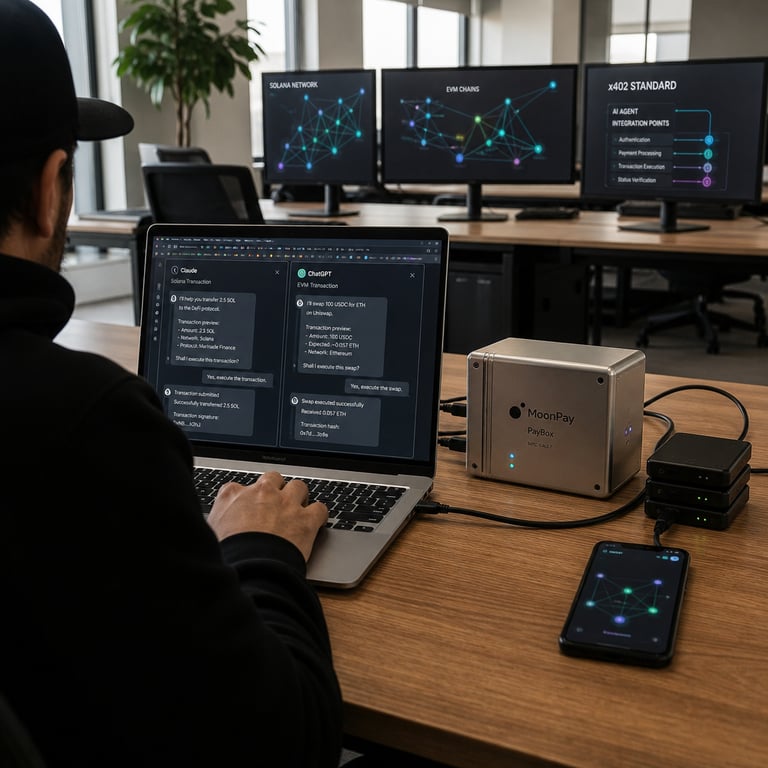
 The July 29, 2026 launch provides a secure, non-custodial way for AI agents to handle transactions on Solana and EVM chains directly within chat interfaces, using MPC vaults and x402 standard.
By The Intel Desk · 9 MIN READ
 Frontier Models
 xAI's flagship model for coding and agentic work becomes available through B.AI's third-party channel, introducing discounted API access alongside official options for developers and enterprises.
By Marcus Vance · 6 MIN READ
 Frontier Models
 The successor model from SpaceXAI delivers benchmark gains in quality and reasoning while cutting token usage and latency, with a planned default rollout that positions it ahead of GPT-Realtime-2.1 and Gemini 3.1 Flash variants.
By Marcus Vance · 4 MIN READ
 Frontier Models
 Beijing startup surpasses initial funding targets with oversubscribed round backed by National Artificial Intelligence Industry Investment Fund and eyes $50 billion pre-money round plus Hong Kong IPO.
By The Intel Desk · 11 MIN READ
 Frontier Models
 The platform provides immediate access to the new models with large context windows and tool support, enabling developers to scale AI agents efficiently without additional setup.
By Marcus Vance · 6 MIN READ
 Frontier Models
 The models add near-1M context, tool calling and multimodal inputs to the platform for coding, visual and agent workflows at listed pricing.
By Marcus Vance · 7 MIN READ
 Frontier Models
 BenchLM.ai data from July 28, 2026 places three Anthropic models at the top of the software engineering benchmark while scores across 59 evaluated systems show tight clustering that points to saturation.
By Marcus Vance · 5 MIN READ
 Frontier Models
 The compact model integrates into MDASH to deliver leading benchmark results through a multi-model agentic approach that routes routine tasks internally while escalating complex cases.
By Marcus Vance · 4 MIN READ