Enterprise AI
On-Premise AI Cost & TCO: The Real 2026 Breakdown
What on-premise AI actually costs in 2026 — hardware, power, staffing, and the utilization break-even against per-token cloud APIs — in one vendor-neutral total-cost-of-ownership model.
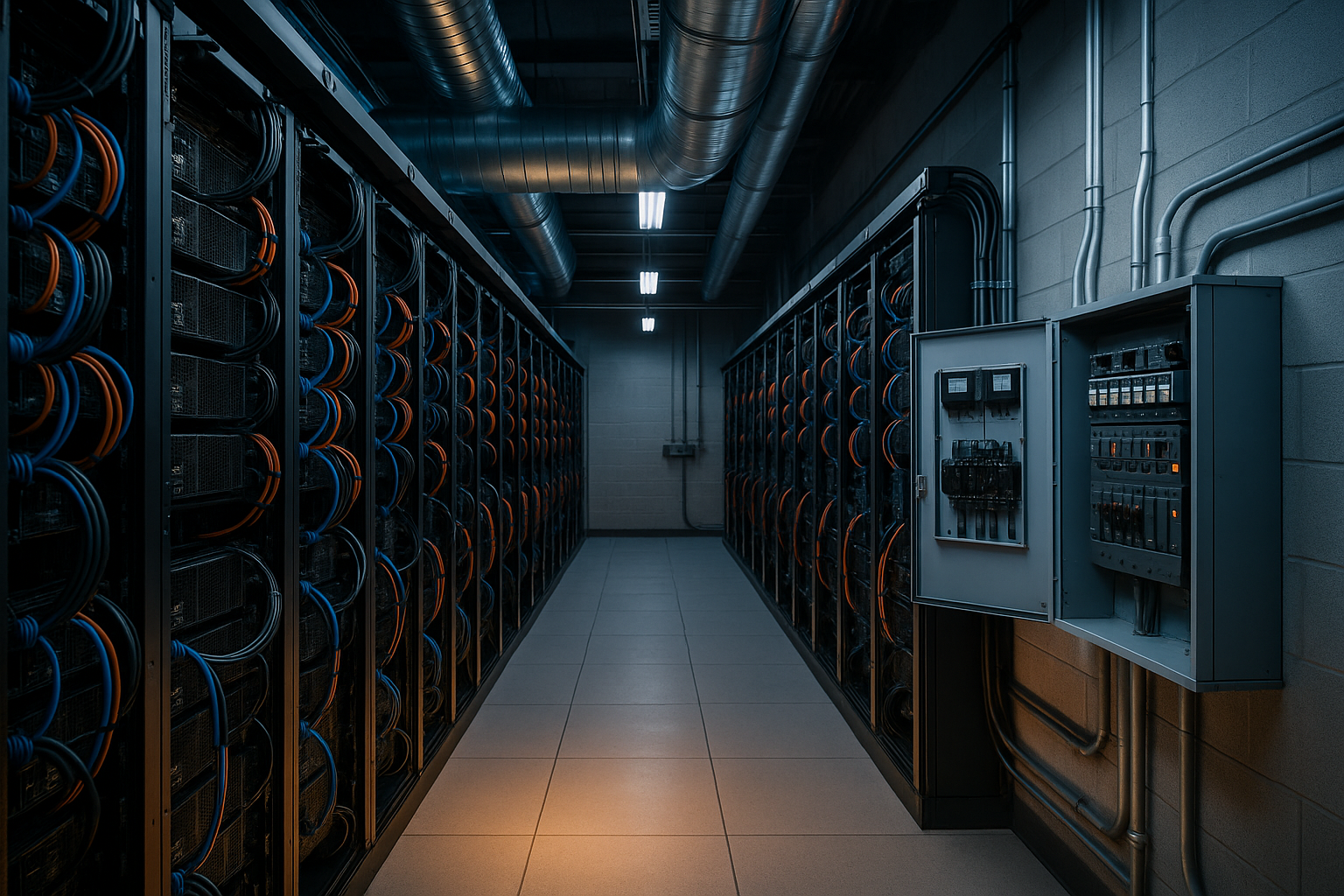
On-premise AI cost is the all-in total cost of ownership of running AI on hardware you control: GPUs, power, cooling, networking, storage, facilities, and staff. It is cheaper than per-token cloud APIs only when GPU utilization stays high — roughly 80% sustained — and otherwise idle hardware makes cloud the better economic choice.
By 2026 the enterprise AI question has moved past whether to use large language models and onto where to run them — and that decision is now driven as much by the bill as by data control. The instinctive comparison is the GPU sticker price against a cloud API's per-token rate, but that comparison is almost always wrong. The real number is total cost of ownership: every dollar a workload consumes over three to five years, on both sides of the buy-versus-rent line. Get the TCO model right and the answer is usually obvious; get it wrong and a team can over-buy a cluster it cannot keep busy, or hand a hyperscaler a metered bill that compounds forever.
What does on-premise AI actually cost in 2026?
On-premise AI cost has two halves: a large upfront capital outlay and a recurring operating bill that many buyers underestimate. On the capital side, a single data-center GPU runs from roughly $25,000 for an NVIDIA H100 PCIe card to $35,000–$40,000 for an SXM5 part, and a complete eight-GPU server or DGX system lands between about $250,000 and $400,000-plus, according to CloudZero's 2026 H100 cost analysis. The newer H200 class has pushed eight-GPU systems to a similar entry point. But hardware is rarely more than half the story. Independent 2026 modeling from Spheron's break-even analysis puts the three-year all-in TCO of one eight-GPU H100 server in the range of roughly $712,000 to $948,000 once power, cooling, colocation, maintenance, and staffing are included.
What hidden costs sit inside an on-premise AI TCO?
The GPU price is the most visible line and often the least decisive. The costs that actually move the model are power, cooling, networking, hardware failure, and people. A single eight-GPU H100 node draws roughly 10 to 10.5 kilowatts under inference load — each H100 has a 700-watt thermal design power, and CPUs, memory, and power supplies add the rest, per Spheron's 2026 power and electricity guide. At an average US commercial rate near $0.12 per kilowatt-hour, that is on the order of $10,500 a year in electricity for one server, and cooling adds another 25 to 40 percent on top depending on your power-usage-effectiveness (PUE) ratio — air-cooled rooms typically run a PUE of 1.3 to 1.5, while liquid cooling can pull it down toward 1.1. Then there is hardware mortality: enterprise GPU failure rates run around 5 to 10 percent annually, so spares and replacement are a real line item. The single largest operating cost, though, is usually staff — keeping a cluster patched, monitored, and reliable consumes at least a fraction of a dedicated infrastructure engineer's year.
| Cost line | Type | Rough 2026 figure |
|---|---|---|
| GPU server (8x H100) | Capital | $250,000–$400,000+ |
| High-speed networking | Capital | $50,000–$100,000+ |
| Electricity (~10 kW node) | Operating | ~$10,500 / year |
| Cooling overhead | Operating | +25–40% of power |
| Colocation / facility | Operating | $12,000–$24,000 / year |
| Staff (≥0.5 FTE) | Operating | $75,000–$100,000 / year |
| 3-year all-in TCO | Total | ~$712,000–$948,000 |
Is on-premise AI cheaper than cloud AI?
Only if you run the hardware hard. Owning GPUs converts a metered cost into a fixed one, so the per-token price falls as throughput rises — but it never falls below zero, and an idle GPU still costs you depreciation, power, and rack space. Cloud APIs, by contrast, charge nothing when you are not calling them. In 2026 those API rates span a wide band: CloudZero's LLM API pricing comparison shows mid-tier frontier models at roughly $2.00–$3.00 per million input tokens and $8.00–$15.00 per million output tokens, with budget models well under a dollar and premium reasoning models far higher. That cheap-to-start, scales-linearly shape is exactly why low-volume teams favor the cloud and why always-on, high-volume teams eventually resent it.
When utilization is genuinely high, owned hardware wins decisively on unit cost. Lenovo's 2026 generative-AI TCO study found a self-hosted Llama 70B costing about $0.11 per million tokens versus roughly $2.00 on a comparable hosted API — an order-of-magnitude gap — and modeled five-year savings exceeding $5 million per server for a Blackwell-class system run continuously against on-demand cloud, an 83.8% reduction, per the Lenovo Press 2026 edition. The honest caveat: those numbers assume the hardware stays busy. They do not describe a cluster that sits at 30 percent utilization most of the day.
At what utilization does on-premise AI break even?
Utilization is the hinge of the entire decision, and the 2026 literature is unusually consistent about where it sits. Below roughly 70 percent sustained GPU utilization, cloud generally wins on total cost of ownership; at 80 percent or higher, owned hardware can win over a three-year horizon. In calendar terms, Lenovo's study found break-even arriving in under four months against on-demand cloud pricing for high-utilization workloads, stretching to nine or ten months when measured against deeply discounted multi-year reserved cloud contracts. The uncomfortable reality is that most production teams run their GPUs at only 40 to 65 percent utilization — comfortably under the threshold — which is why batching, model consolidation, and right-sizing the cluster often matter more to the final bill than the purchase decision itself.
| Scenario | Cheaper option | Why |
|---|---|---|
| Sustained 80%+ GPU utilization | On-premise | Fixed cost amortizes; per-token price collapses |
| Bursty or low-volume usage | Cloud | No idle-hardware penalty; pay only for calls |
| Below ~40 GPU-hrs/week | Cloud | Owned GPUs never reach break-even |
| Strict data residency / air-gap | On-premise | Cloud may be non-compliant at any price |
| Privacy-driven, lower throughput | Local AI-PC | Fixed per-seat cost, no GPU cluster needed |
How do you build a defensible on-premise AI TCO model?
Model the full picture over three to five years, not the GPU invoice over one. Start with capital — servers, networking, storage, and any facility build-out — then layer in annual operating costs: electricity calculated as GPU wattage times hours times your local rate, multiplied by your PUE for cooling; colocation or data-center space; maintenance and spares budgeted against a 5-to-10-percent annual failure rate; software; and the realistic staff time to run it all. Divide the total by the tokens you will actually process to get a true cost per million tokens, then set that beside a metered cloud bill at the same volume. The decisive input, every time, is honest utilization. The same hardware can look like a bargain or a boondoggle depending on whether it runs at 85 percent or 35 percent — so model your real read and write patterns, not your launch-day peak, before committing capital.
The lighter-weight on-premise option
One development reshaping the 2026 cost conversation is that not all on-premise AI needs a GPU cluster at all. For privacy-driven, lower-throughput work — drafting, summarization, document Q&A on sensitive files — small open-weight models such as Llama, Mistral, and Gemma now run acceptably on modern AI-PC hardware with a built-in neural processing unit (NPU). That collapses the TCO question from a six-figure cluster into a fixed per-seat software cost with no metered inference and no data center to power. It will not match a tuned GPU farm on heavy throughput, but for the large share of enterprise use cases that are about keeping data inside the building rather than maximizing tokens per second, it can be the cheapest compliant option on the board — and it sidesteps the utilization trap entirely. The right answer, as always, is to model your own workload honestly: on-premise AI is not categorically cheaper or more expensive than the cloud — it is cheaper at high, predictable volume and more expensive at low, bursty volume, and the break-even is yours to calculate.
Frequently asked
How much does on-premise AI cost in 2026?
On-premise AI cost in 2026 splits into a large upfront capital outlay and a recurring operating bill. A single data-center GPU runs roughly $25,000 for an H100 PCIe card to $40,000 for an SXM5 part, and a full eight-GPU server or DGX system lands between about $250,000 and $400,000 before you add networking, storage, and the room to host it. On top of that, plan for power (an eight-GPU H100 node draws around 10 kilowatts), cooling overhead, colocation or facility space, and at least a fraction of a full-time engineer to keep it running. Independent 2026 analyses put the three-year all-in TCO of one eight-GPU H100 server in the range of roughly $712,000 to $948,000. The headline hardware price is rarely more than half the real total.
Is on-premise AI cheaper than cloud AI?
It depends almost entirely on how hard you run the hardware. Owning GPUs converts a per-token or per-hour meter into a fixed cost, so the more inference you push through them, the cheaper each token gets. Vendor-neutral 2026 modeling finds that below roughly 70 percent sustained GPU utilization, cloud usually wins on total cost of ownership, while at 80 percent and above on-prem can win over a three-year horizon. When utilization is genuinely high, the per-million-token cost on owned hardware can be far lower — Lenovo's 2026 TCO study put a self-hosted Llama 70B at about $0.11 per million tokens versus roughly $2.00 on a comparable API, an order-of-magnitude gap. For bursty or low-volume workloads, idle GPUs are wasted capital and cloud is cheaper.
What hidden costs are in an on-premise AI TCO?
The GPU sticker price is the most visible cost and often the smallest part of the total. The hidden line items are power, cooling, networking, storage, facilities, and people. A single eight-GPU H100 server draws about 10 kilowatts, costing on the order of $10,500 a year at average US commercial electricity rates, and cooling adds another 25 to 40 percent on top of that depending on your power-usage-effectiveness ratio. High-speed InfiniBand or equivalent interconnect can add tens of thousands of dollars, and GPUs fail — enterprise failure rates run around 5 to 10 percent a year, so replacement and spare-capacity budgeting matters. The largest single operating line item is usually staff: keeping a cluster patched, monitored, and reliable typically consumes at least half a full-time infrastructure engineer.
At what GPU utilization does on-premise AI break even?
Utilization is the single variable that decides the on-prem versus cloud question. Multiple independent 2026 analyses converge on the same band: below about 70 percent sustained GPU utilization, cloud typically remains cheaper on TCO; at 80 percent or higher, owned hardware can win over three years. Measured in calendar time, Lenovo's 2026 study found break-even arriving in under four months against on-demand cloud pricing for high-utilization workloads, stretching toward 9 to 10 months against multi-year reserved cloud rates. The catch is that most production teams actually run their GPUs at only 40 to 65 percent utilization, well under the threshold, which is why disciplined batching and consolidation matter as much as the purchase decision itself.
How do you calculate on-premise AI TCO?
Build the model over a realistic three-to-five-year horizon and include every line, not just the GPUs. Start with capital: GPU servers, networking, storage, and any facility build-out. Add annual operating costs: electricity (GPU wattage times hours times your rate, multiplied by a power-usage-effectiveness factor for cooling), colocation or data-center space, hardware maintenance and spares for the 5-to-10-percent annual failure rate, software, and the staff time to operate it. Then divide the total by the tokens you realistically expect to process to get a true cost per million tokens, and compare that to a metered cloud bill at the same volume. The decisive input is honest utilization — model your actual read and write patterns, not your peak.
Should small teams buy on-premise AI hardware?
Usually not, on cost grounds alone. The economics of owning data-center GPUs reward sustained, near-continuous use, and most small teams cannot keep an expensive cluster busy enough to beat a per-token API. 2026 analyses suggest the break-even for a purchased GPU server arrives only after roughly 18 months of continuous, near-full utilization, and teams running fewer than about 40 GPU-hours a week are almost always better off renting. There is, however, a lighter-weight on-prem option that changes this math: small open models running locally on modern AI-PC hardware with a built-in neural processing unit. That approach turns on-premise AI into a fixed per-seat cost with no GPU cluster at all, which can be far cheaper for privacy-driven, lower-throughput use cases.
Sources
- Lenovo Press — On-Premise vs Cloud: Generative AI Total Cost of Ownership (2026 Edition)
- Spheron — LLM Inference On-Premise vs GPU Cloud: 2026 Cost and Break-Even Analysis
- Spheron — AI Inference Power Consumption and GPU Electricity Costs: 2026 Guide
- CloudZero — H100 GPU Cost In 2026: Buy, Rent, And Cloud Pricing Compared
- CloudZero — LLM API Pricing Comparison In 2026: Every Major Model, Ranked By Cost